
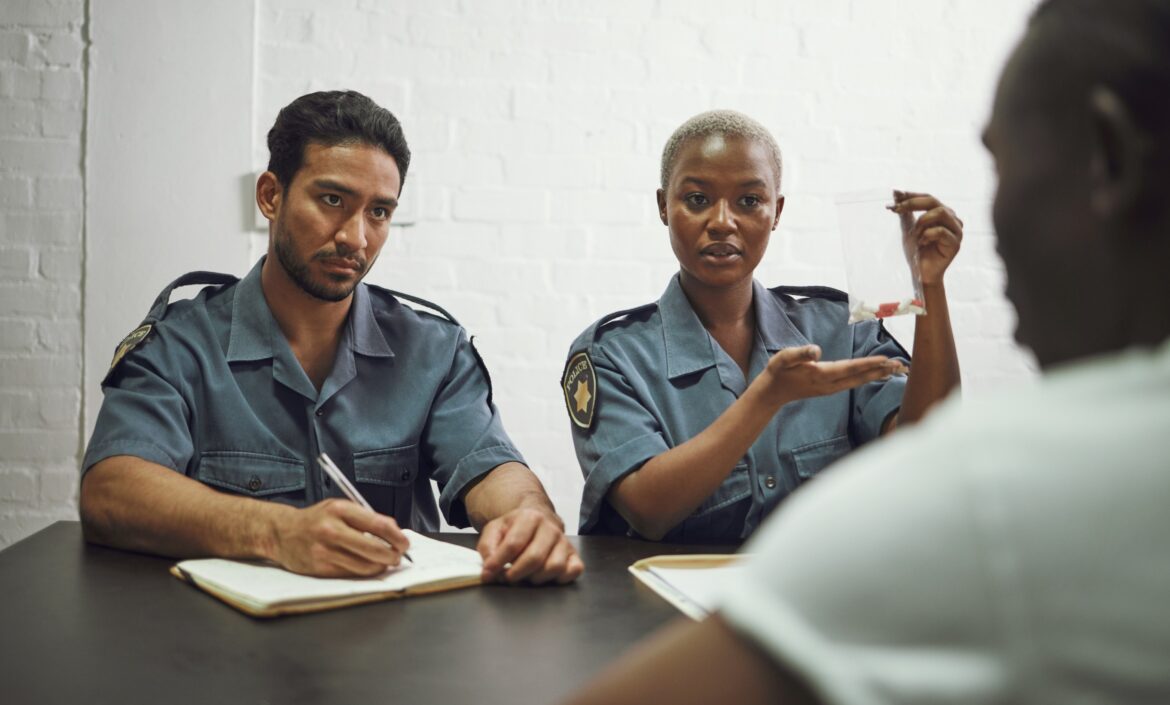
A Coweta County detective leaves a voicemail. Polite voice. First name. The pitch goes something like this: hoping you can come down to the station and clear something up. No mention of an arrest. No mention of a warrant. Just a conversation.
Anyone who has gotten that call should know: that voicemail puts you in one of the most legally weaponized situations in the entire criminal process, and almost nobody handles it correctly the first time.
So can police bring you in for questioning without a warrant?
The short answer in Georgia is yes, but only if you agree to come. That nuance is the whole game.
A police officer cannot lawfully detain you and transport you to a station for interrogation without either (a) probable cause to arrest you, (b) a warrant, or (c) your voluntary consent. Most invitations to “come on down and talk” fall in bucket (c). They are invitations, not commands. You can say no. You can say no firmly, politely, and without explanation. And the officer’s authority over you ends right there.
The catch is that almost nobody believes that in the moment. The instinct is to cooperate, to clear it up, to demonstrate you have nothing to hide. That instinct is the most expensive instinct in criminal defense.
Why “voluntary” questioning is the prosecutor’s favorite tool
Custodial interrogation triggers Miranda. Voluntary, non-custodial questioning does not. If a Georgia detective can keep the encounter “voluntary,” they don’t have to read rights, they don’t have to record everything by statute (though many departments do anyway), and any statement made is fair game in court.
That is why the language is always soft. Are you available to come in? We would love your side of the story. It would really help us out. None of that is accidental. Each phrase is designed to keep the encounter in the voluntary lane so the detective doesn’t have to deal with the legal architecture of an arrest.
The visitor walks in. Sits down. The door closes (sometimes). Water gets offered. The free-to-leave language gets dropped. The interview lasts 45 minutes, or 90, or three hours. Somewhere in there, a sentence comes out that reads differently in a transcript than it sounded in the room. That sentence becomes the case.
What Georgia case law actually says
Georgia courts have been clear: a person who voluntarily appears at a police station for questioning, and who is told they are free to leave, generally is not in custody, and Miranda warnings are not required. See State v. Wintker, 223 Ga. App. 65 (1996), and the line of cases following it. The “free to leave” language is not magic, but it is close.
So what makes an encounter custodial under Georgia law? Whether a reasonable person in that position would have believed they were free to leave. That standard is squishy by design. Detectives know how to hover near the line without crossing it.
The result is a real-world principle: anyone who walks into the station on their own, their statements are almost certainly admissible against them, even without Miranda warnings, and even if they didn’t realize they were being investigated as a suspect.
What to do when you get the call
Run this script. Memorize it.
- Don’t answer the question on the phone. “Can I call you back?” works fine.
- Don’t go to the station. Not yet. Not until a lawyer has reviewed the situation.
- Call a defense attorney. Not your cousin who handles real estate closings. Someone who actually walks into Newnan, Carrollton, or Coweta courtrooms.
- Have the lawyer call the detective. That single call changes the entire posture of the encounter. Sometimes the questions get answered in writing. Sometimes the case never moves forward. Sometimes the visitor still goes in, but with counsel present and a clear plan for what to say and not say.
- Don’t post anything online. Don’t text the people involved. Don’t reach out to the alleged victim. Don’t drive past the address.
The team at J. Ryan Brown Law has covered the realities of police questioning without a warrant in Georgia, and the recurring theme in those write-ups matches what defense lawyers in the area report seeing in practice: the people who do worst are the ones who go in alone trying to “just clear it up.” The people who do best are the ones who treat the call as the first move in a chess game and bring a lawyer to the second move.
The myths that get people charged
A few that come up over and over in Georgia police questioning rights conversations:
“If I refuse to talk, they’ll arrest me.” Not true. Refusing to make a voluntary statement is not probable cause for arrest. If they had probable cause already, they wouldn’t be asking.
“If I lawyer up, I look guilty.” Maybe to the detective. Not to the judge, not to the jury. By the time a case is in front of a finder of fact, the question is what the evidence shows, and a clean record of “exercised right to counsel” is invisible to the jury.
“I have to answer or I’m obstructing.” Refusing to answer questions is not obstruction in Georgia. Lying to law enforcement can be. Stay quiet rather than spin.
“They told me I’m not under arrest, so it’s fine.” Whether the encounter is an arrest is a question for a judge later. What matters in the room is what gets said, and what gets said becomes the case file.
The takeaway
Georgia police can bring a person in for questioning without a warrant only if that person agrees to come. The whole apparatus of “voluntary” questioning is built around that consent, and the second the answer is no, the apparatus stops working. That isn’t obstruction. That is the system working the way the Constitution drew it up.
A detective leaving a voicemail is not a reason to call back and explain. It is a reason to call a lawyer and let the lawyer call back. The case saved is the caller’s own.